Vai alla homepage

Come funziona

Abbiamo trasformato la ricerca di cliniche rendendola semplice, veloce e personalizzata.
Rispondi a poche domandeCompleta un breve questionario per condividere i tuoi obiettivi di Trapianto di capelli DHI.
Ricevi offerte personalizzate3 cliniche selezionate appositamente in base alle tue risposte propongono piani di trattamento e preventivi personalizzati.
Scegli la migliore opzioneConfronta le offerte e scegli la clinica che più si adatta alle tue esigenze.
Puoi anche sfogliare tutte le 9 cliniche qui sotto.
820К+ pazienti hanno ricevuto assistenza dal 2014
50 paesi
1,500 cliniche
6K+ recensioni
3K+ Oltre 3.000 medici qualificati

Qual è il prezzo di Trapianto di capelli DHI in Thailandia? Scoprilo ora

Il prezzo medio di Trapianto di capelli DHI in Thailandia è di $3,998 / 135,932฿, il prezzo minimo è di $2,966 / 100,844฿, e il prezzo massimo è di $5,030 / 171,020฿.
Dati verificati da Bookimed a July 2026, basati sulle richieste dei pazienti e sulle offerte ufficiali di 138 cliniche in tutto il mondo. I costi mediani si basano su fatture reali (2025–2026) e sono aggiornati mensilmente. I prezzi effettivi possono variare.

Non perdere queste offerte esclusive di Trapianto di capelli DHI in Thailandia per luglio 2026

Tipo di procedura
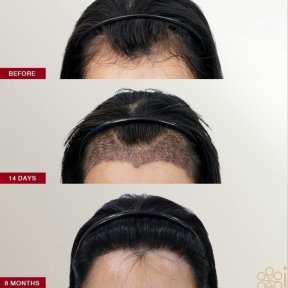
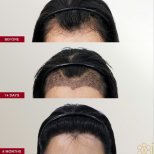
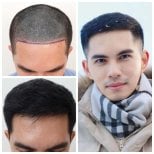
Before and after hair transplant results at Department of Skin & Surgery - NAVAMIN9 HOSPITAL
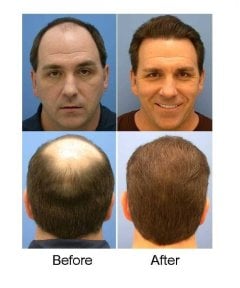
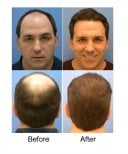
Before and after hair transplant result at Department of Skin & Surgery - NAVAMIN9 HOSPITAL
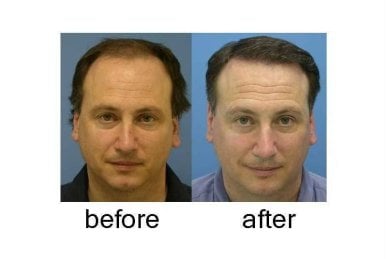
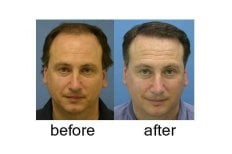
Before and after hair transplant results at Department of Skin & Surgery - NAVAMIN9 HOSPITAL
20 anni di esperienza
10000 trattamenti

MEN/WOMEN DHI hair transplant (1 zone) UNLIMITED GRAFTS (case review)

Il Dott. Ariyapon Lortaraprasert ha eseguito oltre 900 trapianti di capelli in 19 anni, specializzandosi nelle tecniche FUE robotica e manuale. Il ripristino dei capelli in questa clinica accreditata JCI costa generalmente tra $2,500 e $7,000, con pacchetti premium che coprono 2500 innesti, sessioni di PRP e analisi del sangue. Il Dott. Lortaraprasert è certificato nel sistema robotico ARTAS e membro di ISHRS, FUE Europe e WFI.

Scopri le migliori cliniche di Trapianto di capelli DHI in Thailandia: 9 opzioni verificate e Prezzi

Le classifiche delle cliniche di Bookimed si basano su algoritmi di data science, offrendo un confronto affidabile, trasparente e oggettivo. Considerano la richiesta dei pazienti, i punteggi delle recensioni (positive e negative), la frequenza di aggiornamento di trattamenti e prezzi, la rapidità di risposta e le certificazioni delle cliniche.
ID Clinic Bangkok
Asia Cosmetic Hospital
Intrarat Hospital
Wansiri Hospital
Dr. Chen Surgery Hospital International Center

Panoramica di Trapianto di capelli DHI in Thailandia

Conclusioni
Procedure correlate e Costi
Come funziona
Cosa aspettarsi
Vantaggi
Pagamento
pazienti raccomandano -
85%
Tempo dell'intervento - 4 ore
Soggiorno nel paese - 3 giorni
Riabilitazione - 1 giorni
Anestesia - Anestesia locale
Richieste in corso - 110449
Recensioni verificate dei pazienti - 9
Commissioni Bookimed - $0

Ottieni una valutazione medica di Trapianto di capelli DHI in Thailandia: consulta ora 9 medici esperti

Vedi tutti i medici
verificato

Dr Phatcharasak Kraisornphongsakul Md

34 anni di esperienza • 20000+ trattamenti eseguiti

Specializzato nel trapianto di capelli DHI presso la ID Clinic di Bangkok, rinomata per i risultati precisi e dall'aspetto naturale.

  • Esperto nelle tecniche avanzate DHI – un metodo minimamente invasivo
  • Si concentra sul design della linea frontale specifico per il paziente per ottenere risultati ottimali
  • Lavora presso la ID Clinic di Bangkok – una clinica con tecnologia moderna
verificato

Tanongsak Panyawirunroj

28 anni di esperienza • 15000+ trattamenti eseguiti

Il Dott. Tanongsak Panyawirunroj porta un'esperienza internazionale nella chirurgia estetica al trapianto di capelli DHI presso l'Asia Cosmetic Hospital.

  • Specializzato in Chirurgia Plastica e Ricostruttiva presso l'Ospedale Siriraj
  • Formazione in Chirurgia Craniofacciale ed Estetica a Taiwan e Corea del Sud
  • Fondatore e Direttore Generale della Clinica ASIA, dimostrando leadership nel settore sanitario
  • Oltre 15 anni di esperienza nelle procedure cosmetiche
verificato

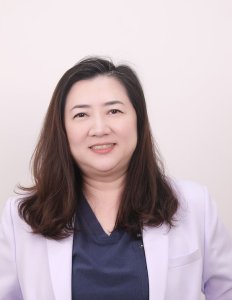
Ariyapon Lortaraprasert

20 anni di esperienza • 10000+ trattamenti eseguiti

Dr. Ariyapon Lortaraprasert has performed over 10,000 operations at the JCI-accredited Navamin 9 Hospital. He specializes in hair restoration and aesthetic medicine in Bangkok. Dr. Lortaraprasert is a member of the International Society of Hair Restoration Surgery (ISHRS).

  • Certified in the ARTAS robotic system for automated hair transplantation.
  • Holds certifications in dermatology and American aesthetic medicine.
  • Expert in FUE, DHI, and body hair transplant techniques.
  • Uses Thermage and Ulthera for non-surgical rejuvenation.
verificato

Ploypailin Rattanachinnakorn

27 anni di esperienza

Dr. Ploypailin Rattanachinnakorn is a plastic and reconstructive surgeon at Intrarat Hospital in Bangkok. She completed training in facelift techniques at the 2024 KVPS Symposium in Korea. Dr. Rattanachinnakorn treats a variety of conditions, including gynecomastia and congenital deformities.

  • Holds a certificate in Plastic and Maxillofacial Surgery from Ramathibodi Hospital.
  • Maintains membership in the Royal College of Surgeons of Thailand.
  • Is a member of the Medical Council of Thailand.
  • Works at ISO-certified Intrarat Hospital, which treats 100,000 patients annually.

Storie in video dei pazienti Bookimed

Oksana
I have fulfilled my dream. Finally, I won't cry about my hair anymore.
Procedura: Trapianto di capelli
Clinica: Dr. MED
Roman
Just 4 days in Turkey, and I'm already home with a new hair.
Procedura: Trapianto di capelli
Clinica: Hair Clinic
Diana
Thanks to Bookimed, I found hope and a clinic willing to help.
Procedura: Trapianto di capelli
Recensione anonima • Trapianto di capelli
Australia
19 giu 2026
Recensione verificata.
The most reassuring part of the whole process was sitting with the surgeon before we started
La parte più rassicurante dell’intero processo è stata il colloquio con il chirurgo prima di iniziare. Si è preso il tempo di disegnare insieme a me l’attaccatura dei capelli e mi ha spiegato chiaramente l’intero processo di estrazione e impianto FUE, il che mi ha aiutato a gestire le mie aspettative riguardo all’intervento da 2.000 a 3.000 innesti. Ora, nelle prime fasi di guarigione, mi sento più o meno come mi aspettavo. La clinica si è tenuta in contatto con me, il che è positivo. Nel complesso, è stata un’esperienza positiva sia con il chirurgo che con il personale, e ho apprezzato il fatto che non ci siano state spese aggiuntive oltre a quelle indicate nel preventivo.

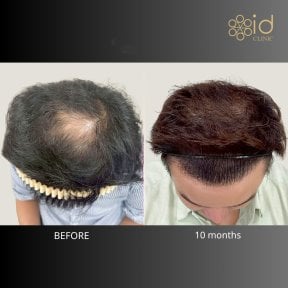
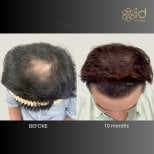
Trapianto di capelli DHI: Foto prima e dopo

Vedi tutti i Prima e Dopo

Condividi contenuto

Aggiornato: 06/19/2026
Scritto da
Anna Leonova
Anna Leonova
Responsabile del Team Content Marketing
Copywriter medico certificato con oltre 10 anni di esperienza, ha sviluppato i contenuti affidabili di Bookimed, con il supporto di un Master in filologia e interviste con esperti medici da tutto il mondo.
Revisione da parte di Consulente medico Bookimed
Fahad Mawlood
Editor medico e Data Scientist
Medico generico. Vincitore di 4 premi scientifici. Ha lavorato in Asia Occidentale. Ex capo del team medico per i pazienti di lingua araba. Ora responsabile dell'elaborazione dei dati e dell'accuratezza dei contenuti medici.
Fahad Mawlood Linkedin
Questa pagina può includere informazioni relative a varie condizioni mediche, trattamenti e servizi sanitari disponibili in diversi paesi. Si prega di notare che il contenuto è fornito solo a scopo informativo e non deve essere interpretato come consiglio o indicazione medica. Si prega di consultare il proprio medico o un professionista sanitario qualificato prima di iniziare o modificare un trattamento medico.

Dati chiave su Trapianto di capelli DHI

Trapianto di capelli DHI

L'impianto diretto di capelli (DHI) prevede l'utilizzo di una penna specializzata per impiantare i follicoli piliferi uno ad uno direttamente nel cuoio capelluto.

Pro: Offre un controllo preciso sulla direzione e sulla densità dei capelli, garantendo un'attaccatura naturale. La manipolazione minima dei follicoli piliferi aumenta il tasso di sopravvivenza fino al 15%.
Contro: In genere richiede più tempo rispetto alla tecnica FUE e necessita di professionisti altamente qualificati. Ciò può comportare sessioni più lunghe.
Efficacia: Tasso di sopravvivenza degli innesti fino al 95%.
Durata: 6-8 ore
Recupero: 7-10 giorni
Ideale per: Piccole aree che richiedono un'elevata precisione, fino a 4000 innesti.
Prezzi: Costo di Trapianto di capelli DHI in Thailandia da $2,966

Domande frequenti su Trapianto di capelli DHI in Thailandia

Queste domande frequenti provengono da pazienti reali che cercano assistenza medica tramite Bookimed. Le risposte sono fornite da coordinatori medici esperti e rappresentanti affidabili delle cliniche.

Are the results of a DHI hair transplant permanent?

DHI hair transplant results are permanent because follicles are harvested from DHT-resistant donor areas, typically the back of the head. These transplanted grafts retain their genetic resistance to balding. In Thailand, specialized surgeons use Choi implanter pens to ensure high survival rates exceeding 90%.

  • Genetic permanence: Transplanted follicles remain resistant to hormones that cause hair thinning and loss.
  • Survival rate: Choi pens minimize graft handling, maintaining high viability during the implantation process.
  • Growth timeline: Initial shedding occurs within 3 months, with final permanent results visible after 12 months.
  • Native hair: While transplanted hair stays, original hair may thin, potentially requiring future touch-up sessions.

Bookimed Expert Insight: While DHI is marketed as permanent, long-term density depends on donor management. Data from Thai clinics like ID Clinic Bangkok show that high-volume centers performing 20,000+ procedures emphasize protecting the donor area. Avoid budget-tier clinics where overharvesting can deplete your `safe` zone, making future top-up procedures impossible if your native hair continues to thin.

Patient Consensus: Expect significant shedding or shock loss during the first 6 months before stable regrowth begins. Most patients find that maintaining surrounding hair with medication is necessary to keep the transplant looking natural as they age.

What exactly is DHI (Direct Hair Implantation)?

Direct Hair Implantation (DHI) is an advanced hair restoration technique where a surgeon extracts individual follicles and immediately implants them using a Choi Implanter Pen. This tool combines channel creation and graft placement into one step, significantly reducing the time hair follicles spend outside the body.

  • Implantation tool: Surgeons use a specialized Choi Pen to inject follicles directly into the scalp.
  • No pre-made incisions: This method avoids manual blade channels, which minimizes trauma and speeds up healing.
  • Precise angulation: The pen provides millimetric control over the depth and direction of every hair.
  • No-shave option: DHI allows for discreet transplants without shaving the entire donor or recipient areas.

Bookimed Expert Insight: Thailand's medical infrastructure offers a unique advantage for DHI, with JCI-accredited facilities like Navamin9 Hospital serving over 500,000 patients annually. While DHI is often marketed as a premium, no-incision alternative, our data shows that its true value lies in high-density hairline reconstruction. Choosing a surgeon like Dr. Phatcharasak Kraisornphongsakul, who has performed 20,000+ operations, is more critical for graft survival than the specific pen brand used.

Patient Consensus: Patients often highlight that while DHI costs more per graft, the reduced downtime is a major benefit. Many recommend waiting at least 12 months for final density, noting that initial shock loss is a normal part of the process.

What are the main benefits of DHI over standard FUE?

Direct Hair Implantation (DHI) provides superior hair density and faster healing compared to standard FUE. By using a specialized Choi implanter pen to place follicles directly without pre-made incisions, surgeons achieve natural-looking angles and 95% graft survival rates. In Thailand, DHI recovery typically lasts 3–5 days.

  • Graft survival: Shorter out-of-body time boosts survival rates to 95% compared to FUE.
  • Recovery timeline: Patients recover in 3–5 days versus 7–10 days for standard FUE.
  • Implantation precision: Choi pens allow exact control over hair direction, depth, and dense packing.
  • Reduced trauma: Eliminating recipient site slits minimizes scalp swelling and post-operative tissue damage.

Bookimed Expert Insight: While DHI offers premium density, it is physically demanding for the surgeon. Data shows DHI is typically limited to 2,500 grafts per day, whereas FUE can handle 4,000. For extensive balding, a multi-day session or a hybrid approach at high-volume clinics like NAVAMIN9 HOSPITAL may be necessary.

Patient Consensus: Patients value the no-shave option for discreet procedures but emphasize vetting surgeon skill. Success depends on the doctor’s ability to manage hair directionality using the specialized implanter tool.

What is the recovery timeline for DHI?

DHI hair transplant recovery in Thailand follows a phased timeline, with physical healing occurring within 7 to 14 days. Growth begins around month 4, while full density is typically achieved between 12 and 18 months, depending on the recipient area and blood flow.

  • Initial healing: Redness and mild swelling often peak by day 3 after the procedure.
  • Graft stabilization: Scabs naturally shed between days 4 and 10 with gentle hospital-guided washing.
  • Shock loss: Transplanted hair shafts typically shed between weeks 2 and 8 during follicle dormancy.
  • Growth phase: New fine hairs emerge at month 4, reaching 60% density by month 6.

Bookimed Expert Insight: Thai clinics often achieve high success rates by utilizing surgeons like Dr. Ariyapon Lortaraprasert, who holds specialized ARTAS and ISHRS credentials. Data shows that clinics like Navamin9 Hospital and Asia Cosmetic Hospital manage massive patient volumes, which often results in more refined post-operative kits compared to smaller regional centers.

Patient Consensus: Many patients report that donor area soreness can last up to 2 months rather than just 2 weeks. While shock loss at week 3 can be alarming, following the provided clinical sprays ensures hair grows back stronger by month 4.

How do I verify the quality of a Thai surgeon?

Verify a Thai surgeon by confirming their registration with the Medical Council of Thailand (TMC). Ensure they hold specialized hair restoration certifications from the International Society of Hair Restoration Surgery (ISHRS) and operate in facilities accredited by Joint Commission International (JCI).

  • Medical license: Search the official Medical Council of Thailand database using the surgeon's full name.
  • Specialist credentials: Confirm memberships in global bodies like the International Society of Hair Restoration Surgery.
  • Facility accreditation: Select clinics with Joint Commission International (JCI) or ISO International Standards certification.
  • Clinical experience: Prioritize surgeons like those at NAVAMIN9 HOSPITAL with over 10,000 procedures performed.

Bookimed Expert Insight: Top-tier Thai specialists often serve as international medical instructors. For example, Nil Namthongton at Namninforv Clinic teaches aesthetic medicine at the university level. Choosing a surgeon who trains others signifies a mastery of DHI techniques that standard practitioners may lack.

Patient Consensus: Patients emphasize requesting the surgeon's full name upfront to verify their specific case history. Many recommend viewing unedited 18-month results to ensure natural-looking density from no-shave DHI procedures.

Is it possible to get a DHI transplant without shaving my head?

You can undergo a DHI hair transplant in Thailand without shaving your entire head. Specialized techniques like No-Shave or Partial Shave DHI use a Choi Implanter Pen to navigate between existing hair strands, making the procedure virtually undetectable for patients with longer hair.

  • No-shave technique: Surgeons implant up to 1,500 grafts without trimming any donor or recipient hair.
  • Partial shave DHI: A small hidden window is shaved in the donor area for 3,000 grafts.
  • Choi implanter pen: Specialized tools allow precise follicle placement without making prior incisions in long hair.
  • Recovery timeline: Patients often return to work within 3 days or less without visible signs.

Bookimed Expert Insight: While many clinics offer unshaven options, the technical difficulty often limits these sessions to under 2,500 grafts. Doctors like Dr. Ariyapon Lortaraprasert at Navamin9 Hospital, who has performed over 10,000 procedures, emphasize that maintaining high survival rates requires exceptional visibility. If you need a mega-session of 4,000+ grafts, surgeons may recommend at least a partial trim to prevent infection risks and ensure graft health.

Patient Consensus: Patients report high satisfaction with the ability to camouflage the procedure immediately. Many successfully returned to their professional routines within 72 hours without anyone noticing the surgery.

What is usually included in a Thai DHI package?

Thai DHI hair transplant packages are comprehensive bundles including the surgical procedure using specialized titanium implanters, local anesthesia, and pre-operative blood screenings. These packages typically cover 2,000 to 3,000 grafts, essential post-operative medications, specialized shampoos, and logistical support such as VIP airport transfers and multi-night hotel stays.

  • Medical procedure: Direct Hair Implantation (DHI) often utilizing advanced titanium implanter pen technology.
  • Clinical assessments: Initial specialist consultations, scalp analysis, and essential blood work like HIV screenings.
  • Post-op care: Take-home kits with painkillers, anti-inflammatory meds, and specialized hair growth serums.
  • Travel logistics: Private VIP transfers and 2–4 nights in 4 or 5-star accommodations.
  • Success warranty: Many Bangkok clinics provide 1-year warranties including virtual follow-up consultations.

Bookimed Expert Insight: While many think DHI is a fixed price, Thai clinics like Namninforv Clinic offer specialized variants like the NEAT technique. Data shows that premium packages over $5,050 often bundle `designer beard lines` or manual extraction. Always confirm if your quoted price covers a set graft count or unlimited grafts to ensure the best value for extensive hair loss.

Patient Consensus: Patients emphasize requesting itemized quotes via WhatsApp to clarify if second-day hair washes or PRP treatments are included. Most appreciate the seamless VIP airport pickups but advise budgeting for extra meals not covered in standard 3-night hotel stays.

What is DHI hair transplantation and how does it work in Thailand?

DHI hair transplantation in Thailand uses a specialised Choi implanter pen to place follicles directly into the scalp. These pens allow surgeons to place hairs without pre-cut incisions. Surgeons in Bangkok clinics achieve natural growth by controlling the graft angle and depth in one step.

  • Direct implantation: Grafts are loaded into a pen and implanted immediately to improve survival rates.
  • Choi implanter pen: This tool removes the need for scalp slits. This reduces trauma and scarring during surgery.
  • Specialist credentials: Surgeons like Dr Ariyapon Lortaraprasert hold memberships in ISHRS and FUE Europe.
  • Procedural volume: Top-tier Bangkok centres such as Navamin9 Hospital serve 500,000+ patients annually.

Bookimed Expert Insight: Thai clinics often offer unlimited graft packages for a fixed zone. A$9,700 packages frequently include blood tests, local anaesthesia, and follow-up care. This provides better financial certainty than pay-per-graft models common in Australian clinics.

Patient Consensus: Success in Thailand relies on direct doctor involvement during the implantation phase. Patients value thorough aftercare like specialised washing protocols and medications to protect new graft survival.

What is the typical recovery time for a DHI hair transplant in Thailand?

Visible healing for DHI hair transplants in Thailand typically lasts 10 to 14 days. Most patients return to desk jobs within 3 to 5 days once swelling subsides. Full results appear between 12 and 15 months after the procedure.

  • Clinical stay: Plan for 5 to 7 days in Bangkok for surgery and follow-up care.
  • Physical activity: Avoid strenuous exercise, swimming, and saunas for at least 4 weeks.
  • Shedding phase: Transplanted hairs often shed within 1 month before new growth begins.
  • Visual growth: Identifiable new hair begins appearing around 3 months after transplantation.

Bookimed Expert Insight: Professional aftercare significantly shortens social downtime. Dr. Chen Surgery Hospital International Center uses hyperbaric oxygen and light therapy to reduce swelling faster. These treatments are often bundled into packages. This makes them a smart choice for patients needing a quicker return to work.

Patient Consensus: Expect about 14 days of visible scabbing and months of patience before regrowth. Patients in Thailand appreciate the included follow-up visits and medications that simplify the healing process.

Why should I consider Thailand for a DHI hair transplant?

Thailand offers DHI hair transplants from $3,000 to $5,000. This provides direct implantation technology at a fraction of the $10,700 Australian average. Experienced surgeons using JCI-accredited facilities provide natural results with minimal downtime and high follicle survival rates.

  • Technician-free surgery: Specialist surgeons like Dr Ariyapon Lortaraprasert personally handle follicular implantation.
  • Global credentials: Surgeons hold memberships in the ISHRS and FUE Europe medical societies.
  • High graft survival: Specialist DHI pens provide over 90% follicle survival for denser results.
  • Inclusive packages: Bundles cover consultations, blood tests, local anaesthesia, and follow-up examinations.

Bookimed Expert Insight: Many clinics offer fixed rates. However, Navamin9 Hospital provides unusual unlimited-graft DHI packages for single-zone treatment. This is valuable for Australian patients with extensive thinning. It helps them avoid per-graft pricing traps while benefiting from JCI-accredited safety standards.

Patient Consensus: Travellers choose Thailand for affordable bundled care. This includes diagnosis and medications. Patients recommend comparing surgeon involvement. They also suggest planning return flights carefully for a comfortable early recovery in Bangkok.

Is DHI better than FUE for hair restoration in Thailand?

DHI is better for precise hairline design and filling smaller thinning areas. FUE is more efficient for large-volume coverage. Choosing between them depends on the hair loss pattern. Both methods use the same extraction principle but different implantation tools in Thai clinics.

  • Implantation precision: DHI uses specialised pens for better control over hair angle and depth.
  • Coverage capacity: FUE allows for larger graft numbers to cover extensive balding areas efficiently.
  • Graft handling: DHI pens protect follicles during insertion. This may improve graft survival rates.
  • Healing speed: DHI involves smaller incisions. This typically leads to faster recovery and less swelling.

Bookimed Expert Insight: While DHI is marketed as premium, the best results often come from a hybrid approach. Leading Thai surgeons like Dr. Ariyapon Lortaraprasert at Navamin9 Hospital often use FUE for extraction. They use DHI for the hairline to increase both density and volume.

Patient Consensus: Patients in Thailand find that surgeon skill and donor management matter most. Many suggest comparing long-term photos rather than choosing based on a specific package label.

How long does a DHI hair transplant procedure in Thailand take?

DHI hair transplant procedures in Thailand typically take 4 to 8 hours. This single-day surgery is performed under local anaesthesia. Total clinic time depends on the number of grafts needed for the restoration area.

  • Procedure duration: Most sessions last 4 to 8 hours depending on graft volume.
  • Clinical session: DHI takes longer than FUE as surgeons implant each graft individually.
  • Hospital stay: Patients usually remain in Thailand for 3 to 6 days for follow-ups.
  • Anaesthesia type: Specialists use local anaesthesia for comfort during the day-long process.

Bookimed Expert Insight: Many clinics offer unlimited grafts for one zone. However, Bookimed data shows that surgeons like Dr Ariyapon Lortaraprasert at Navamin9 Hospital cap daily sessions. This prevents fatigue and helps graft viability. Complex cases are often split across two days.

Patient Consensus: Patients in Thailand report that DHI is a full-day commitment. Most recommend allowing extra recovery time after the procedure. This helps manage fatigue before flying back to Australia.

Richiedi una consulenza gratuita

Seleziona il modo migliore per essere contattato